
September through November has always been productive and busy travel times for Capria partners, and this year was no exception, with all of us on the road literally for weeks at a time, working with our local teams in LatAm, Africa, India, and SE Asia, sourcing new founders, supporting our existing portfolio, and contributing to the general VC ecosystem development of the Global South. At least once a year, we write about what we are learning through our travels, building on the previous write-up you can see here. Before I get to our story, I’d like to highlight the following from the Morgan Stanley Global Emerging Markets Team, with which I and my partners wholeheartedly agree:
It would appear then, that most global equity portfolios, no matter how sophisticated, are still guilty of home bias. For decades, they have been missing an opportunity to earn higher risk-adjusted returns by allocating too low a share of their portfolios to international equity. We think their EM allocations are still too low. The analysis above suggests that the typical EM allocation is at most about half, and perhaps as little as one sixth, of what a rational approach would recommend. … In general, we think the logical answer to “how much” to invest in emerging markets is “more.” For a host of fundamental and structural reasons, that answer has rarely been more true than it is right now.

LatAm: Susana
After my trips to Mexico City, Sao Paulo, and Buenos Aires in the past few months, here’s what I’m seeing:
- There is a new generation of serial entrepreneurs in each of these cities who have founded successful companies and are now starting new ones. The multiplier effect of Mercado Libre, Rappi, Pomelo, LemonCash, and Nubank keeps on growing with new companies. Besides creating new startups, several of these founders are investing as angels in very early-stage companies and some funds. See slide 8 of this recent report from LAVCA about the rise of repeat founders.. Very little, if any, of this was happening as recently as 5 years ago.
- Buenos Aires is positioned as a deep-tech hub, continuing to mine the excellent talent base to build products for the region and the world, while Sao Paulo continues as the main focal point for VC investment. I spent time with our team members in both cities and nurtured our long-term relationships with the leading GPs, some of whom I’ve known for 15+ years.
- Nearshoring for Mexico is more than a “buzz”: it’s a massive opportunity. From supply chain financing to logistics or manufacturing, the shift has created ripple effects across many verticals.
- GenAI is showing up more meaningfully in health, ed, and agtech companies, where its application can create new businesses and open new markets. On average, GenAI adoption still lags behind the USA by many quarters, if not a year+. Different government initiatives also focus on AI and other cutting-edge technologies. We see adoption accelerating, improving margins and top-line revenue, and leading to better exits in not too long.
- In net, the ecosystem players are generally bullish on the region despite headwinds faced in the past. I am too.
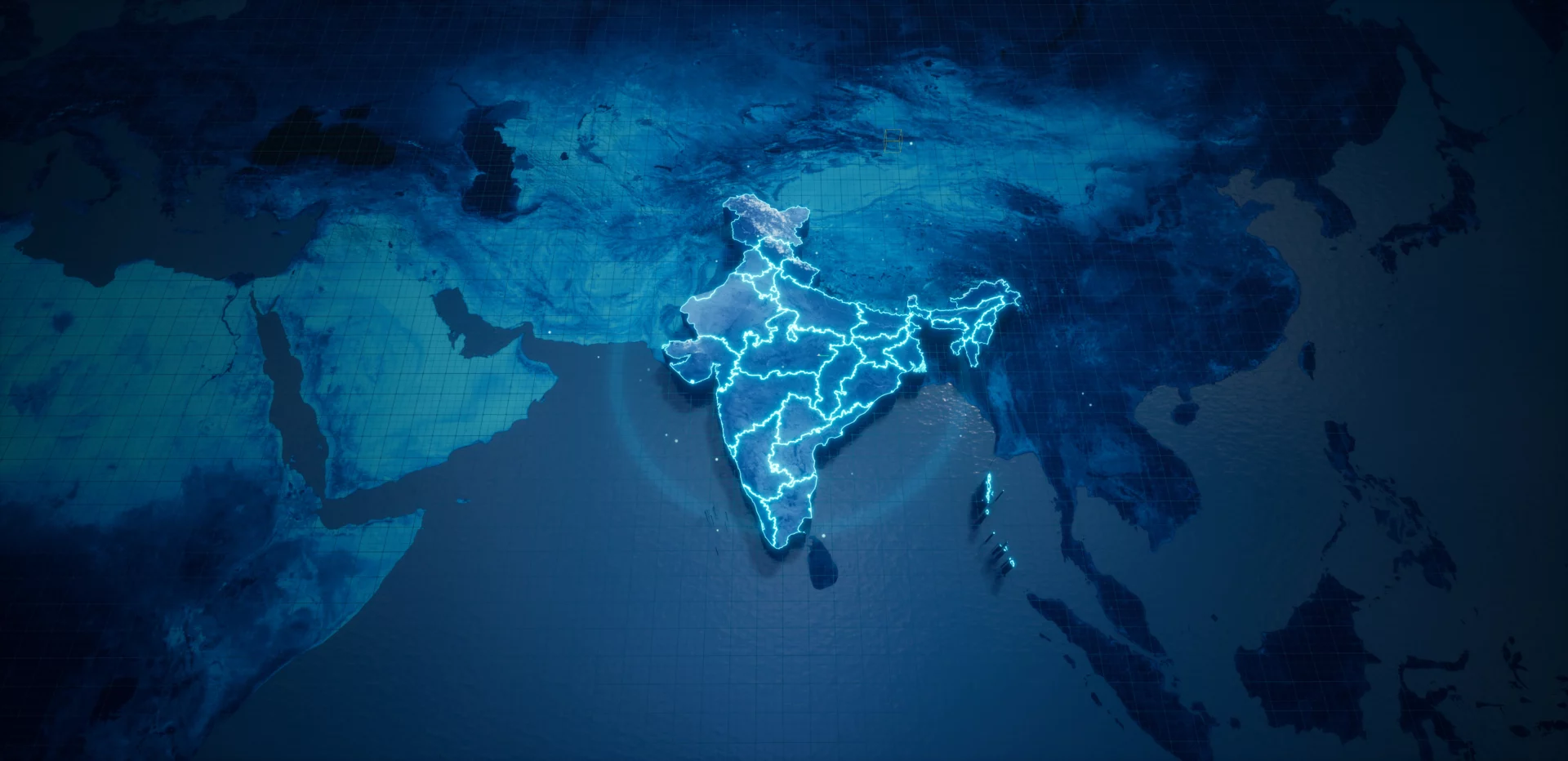
India: Surya
After the somewhat surprising national elections back in June 2024, the new coalition government seems to have found its groove and is chugging along with an economic agenda that remains unchanged and has propelled markets to new highs and set the stage for continued growth.
- The public markets have shown incredible strength – many would call them over-priced.. This has happened in spite of foreign portfolio investors (FPI) withdrawing funds at a pace which a few years ago would have led to a steep fall in the indices. Steady inflows from Indian retail investors (via mutual funds) has led to a new strength and resilience. Of course, no market, including the Indian one, is immune to corporate fundamentals. The recent weaker-than-expected corporate earnings have led to a needed correction. There is some concern that the rebound in consumption after the pandemic may be losing steam. The returns of public market assets impact venture deal pricing and fundraising. As usual, founders don’t internalize the memo soon enough, making negotiations challenging at times.
- The above said, we have seen a spate of successful IPOs, both on the main bourse and the SME platforms (the very active small-cap exchanges attached to each of the two main exchanges). Swiggy – one of the two leading food delivery and quick commerce startups – is the most notable, going public at a USD 12 Billion valuation. Blackbuck, another leading venture-backed logistics startup, also completed a successful IPO. The enthusiastic reception of Indian institutional and retail investors to public issues of venture-backed startups has made IPOs a much more viable exit strategy for VC investors for the long haul. The size and depth of the Indian markets justify this strategy. We have three companies on this path today and can see quite a few more in the coming years.
- Talking about quick commerce, this category emerged out of nowhere during the pandemic. Indian consumers in the top 10 metros have taken to the convenience of 10-minute delivery, like fish to water. An INR 35,000 Crore (USD 4.5 Billion) category has been created from nothing in a short span of 4 years! Zepto, Swigg, and Zomato are the early leaders, forcing eCommerce behemoths Amazon and Flipkart, to follow suit.
- The overhang of Byju’s spectacular flame-out continues to cast a long shadow on the edtech sector. However, despite that, we saw two growth-stage rounds in Physicswallah and Bhanzu. That’s a good sign that investors are willing to back quality ed-tech companies without falling prey to “sectoral gloom.”
- Worried about worsening asset quality in unsecured personal loans, RBI – the Indian financial regulator – ever the prudent watchdog, came out with a note of caution and a clutch of new rules to keep NBFCs (non-banking financial companies) on the straight and narrow. On balance, RBI has always taken a measured approach to managing systemic financial risk, one that has done well by the Indian economy, balancing economic growth with consumer and stakeholder protection. We have several NBFC portfolio companies that, thankfully, have weathered past regulatory belt-tightening very well. We are working with them to ensure the same this time.

Africa: Mobola
Despite the Nigerian Naira falling by 200% over the past 2 years, Moniepoint, one of our star portfolio companies, recently achieved unicorn status 20 months after the last African unicorn was born. They achieved this by profitably processing more than 800 million transactions monthly with transaction values exceeding USD 17B monthly. Moniepoint’s success signals that African fintechs are maturing, drawing global attention, and proving resilient despite economic uncertainty. For investors, it underscores the importance of backing startups that not only solve large-scale problems but can also weather economic pressures.
GenAI is gaining ground in Africa, especially in customer support, language processing, and data analytics. African startups are beginning to localize AI applications, creating tools that resonate with regional languages and specific consumer needs. Resilience 17, one of few AI accelerators on the continent, launched in October with a first cohort of 5 Nigeria-based companies selected from over 200 applications. We spent some time with the Resilience 17 team during a trip to Lagos in October and compared notes over what we see in the market – the emergence of GenAI applications tailored to Africa’s unique challenges with innovators creating impactful solutions in sectors like healthcare—such as AI-driven diagnostic tools, agriculture—with precision farming techniques, and education—through personalized learning platforms. Just as the advent of mobile networks and affordable phones enabled leapfrogging in many dimensions in nearly every emerging economy, we see the adoption of GenAI enabling Africa to leapfrog again, accelerating the digitization of economies and providing consumers access to services that were not previously economically viable.
Nevertheless, across the continent, the VC ecosystem in Africa faced significant volatility during the first nine months of 2024, which posed a significant threat to investor confidence. Companies grappled with strong macro headwinds, which had a knock-on effect on consumer spending and purchasing power, forcing businesses to rethink existing ideas about consumer spending and purchasing power, particularly for B2C business models. Fintech remains the sector that attracts the most funding (60-70%), mirroring the broader trends in emerging markets like SE Asia and the GCC, and underlines the sector’s central role in driving innovation and inclusion in Africa.

SE Asia: Dave
In September, I spent two meeting-packed weeks in Singapore, Jakarta, and Bali, meeting with over 50+ startup founders and investors. This included three investor conferences and lots of networking activities. This deep dive complements my daily interactions with the many SE Asia tech startup and venture ecosystem players. Here is a summary of macro trends, and here are some of my key takeaways:
- Many “tourist” global investors in SE Asia have retreated and will take some time to return. This is part of the ongoing cycle that attracts interest via FOMO during the boom times. Some global growth-stage investors are reallocating SE Asia capital to focus instead on Australia.
- Many local and regional investors have shifted their focus away from tech and tech-enabled startups towards consumer products (think clothing and beauty) and retail (think pizza and coffee outlets) investments. This is driven by the perception that tech startups require a lot of capital burn to reach profitability in these emerging digital economies. I call this the “private equity-ization” of venture capital, but I don’t think it will turn out well for them as there is limited operating leverage without tech. This might generate some nearer-term liquidity, but it won’t deliver the expected upside potential. We are not following this herd.
- There is a growing perception that Indonesian startups must expand into additional SE Asia countries sooner than expected. This requires a different founder skillset/mentality. We are factoring this into our investments, such as Wagely, which has already expanded beyond Indonesia and Bangladesh.
- There continues to be a need for more understanding and adoption of GenAI technologies by SE Asia founders. This is a big missed opportunity as the learning curve is low and there are a lot of low-hanging fruit opportunities to reduce costs and improve customer experience viable already. Founders were very intrigued to hear how our in-house 7-person GenAI team is helping many of our portfolio companies to prototype and deploy GenAI capabilities.
- A growing pipeline of profitable, fast-growing tech-enabled services startups will be raising Series A in the next 6-12 months after 18-24 months of “getting fit.” The valuation multiples are finally getting much more realistic. SE Asia has taken longer than other regions for founders to “get the 2022 memo”. This is our sweet spot; we have less competition with fewer active Series A investors.
- My biggest takeaway: The outsized potential for SE Asia startups is going to be driven by tech. The most leveraged, transformative tech will be going “all-in” with implementing GenAI use cases, building bigger, better, faster, and more profitable businesses serving the rising middle class of SE Asia.

Dubai, Abu Dhabi, India, and Japan: Will
This was my longest trip in a long time, which fortunately had a 1-week break in the middle when I visited Kolkatta for an amazing Hindu religious festival and cultural celebration called Durga Puja. Ask me if you want to see photos or plan a visit.
- Dubai and Abu Dhabi. This was my third trip to the region this year. We’re looking to find high-quality founders building regional businesses operating in our target markets of N. Africa and SE Asia. To make a long story short, my conclusion, backed by a number of other ecosystem players I met with, is that there simply are too few good companies with too much money chasing them. The only way I see to get venture returns there is to invest in quite a few companies early, with an expected higher-than-average failure rate. This is not our strategy, so I expect we will not be making many, if any, direct investments in the region, other than possibly KSA, which still has the problem of rampant over-pricing. That said, the Abu Dhabi government is putting a tremendous amount of money into building AI-powered operating businesses and infrastructure for others via G42. It’s worth reading more about this impressive spend here.
- India. Surya told the big story above. I was primarily focused on 1/ helping a number of portfolio companies advance their GenAI work (some are well ahead of the game, some are lacking, similar to what Dave described above) and 2/ helping two portfolio companies prep their path to IPOs in 2025. This is no small task, although it’s much easier than doing the same in the USA.
- Japan. Japan’s average annual GPD growth has been only 0.6% for the past decade. They also have a rapidly aging population and some severe economic challenges ahead. This has led more innovative companies, including global investing powerhouse SBI and lesser-known but capable companies like Mynavi, to look to India and other countries for growth. We recently helped Mynavi complete an acquisition of one of our portfolio companies, which was a win all around. I was looking to develop more relationships to support the Japan / India corridor of startup development, which holds significant promise for both countries.
As always, we love to hear from you – please get in touch if you’d like to go deeper on any of the above topics or to get a look at any of the SPV deals we have in flight (three of them as I write this message) or to get info on our soon-to-be-at-final-close Global South Fund II where we just papered our 10th deal, a very fast-growing export finance fintech in Vietnam.
Regards,
Will, Dave, Surya, Susana, and Mobola
Capria Partners