Activation Functions play a critical role in helping Neural Networks process complex data. In modern deep learning systems, functions like ReLU, Sigmoid, Tanh, and Softmax are fundamental to improving model performance by introducing non-linearity.
Let’s explore these Activation Functions and their practical uses without unnecessary complexity.
1. What is an Activation Function?
An Activation Function transforms a neuron’s linear output into a non-linear output. Without it, Neural Networks would behave linearly and fail to handle real-world, non-linear data such as images, text, or time series data.
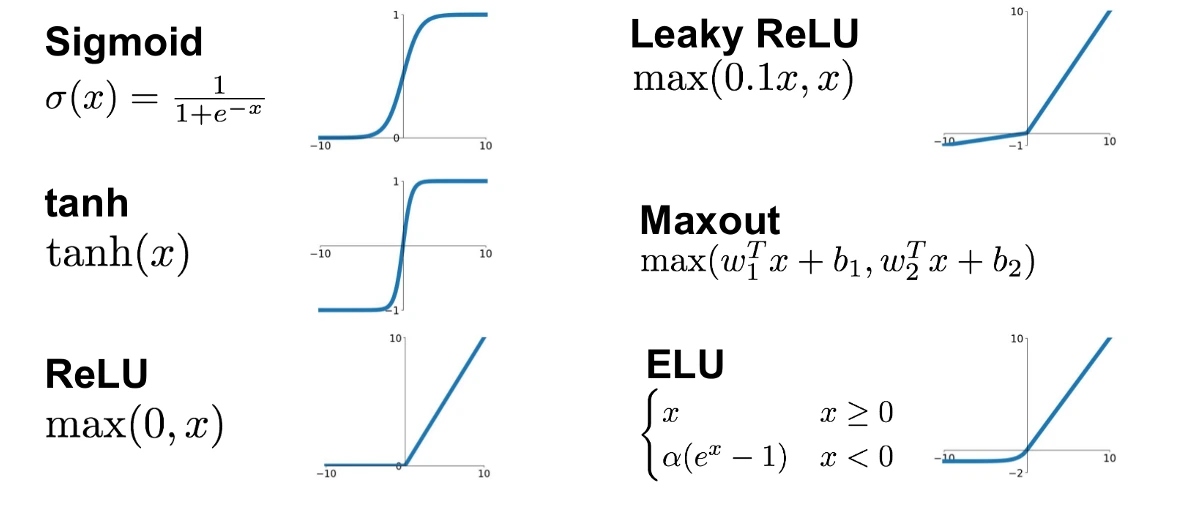
2. Key Activation Functions
a. Sigmoid Activation Function
- Formula:
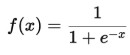
- Range: Output values between 0 and 1.
- Use Case: Commonly used for binary classification tasks where the output represents a probability.
- Pros:
- Smooth curve; ideal for probability-based outputs.
- Cons:
- Prone to the vanishing gradient problem, slowing training in deep networks.
- Outputs are always positive, limiting sparsity in models.
b. Tanh (Tangens Hyperbolicus)
- Formula:
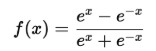
- Range: Output values between -1 and 1.
- Use Case: Preferred for hidden layers in deep networks because it centers outputs around zero, speeding up convergence.
- Pros:
- Symmetric around zero, leading to faster optimization.
- Cons: It is still susceptible to the vanishing gradient problem.
c. ReLU (Rectified Linear Unit)
- Formula:
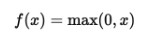
- Range: Output values 0 or positive.
- Use Case: The default activation function for most deep learning tasks, especially in image recognition.
- Pros:
- Simple computation (requires only a max function).
- Reduces vanishing gradient issues by maintaining a constant gradient of 1 for x>0x > 0x>0.
- Encourages sparse networks (neurons output zero for x<0x < 0x<0).
- Cons:
- Dying ReLU Problem: Neurons can get stuck at zero and stop learning.
- Not smooth at x=0x = 0x=0.
d. Softmax Activation Function
- Formula:
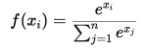
- Range: Converts outputs into probabilities that sum to 1.
- Use Case: Used in the final layer for multi-class classification tasks.
- Pros:
- Ensures all outputs are interrelated and sum to 1.
- Cons:
- Computationally expensive due to exponentials.
3. When to Use Each Activation Function?
- Sigmoid: For binary classification tasks where output represents probabilities (e.g., yes/no decisions).
- Tanh: For hidden layers where centered outputs speed up training.
- ReLU: Default choice for most tasks, especially in deep networks.
- Softmax: For multi-class classification in the final output layer.
4. Challenges and Modern Solutions
- Vanishing Gradients: Sigmoid and Tanh can make gradients very small, slowing training. ReLU and its variants (Leaky ReLU, Swish) help mitigate this issue.
- Dying Neurons: ReLU neurons can get stuck at zero, requiring careful initialization or alternatives like Leaky ReLU.
- Computational Complexity: Sigmoid and Softmax require exponentials, which can slow large-scale training. ReLU is computationally efficient.
Summary
Activation Functions are critical for introducing non-linearity in Neural Networks. Start with ReLU for most tasks, switch to Tanh or Sigmoid when needed, and use Softmax for multi-class problems. Understanding their strengths and limitations will help you choose the best function for your project.
Experiment with modern alternatives like Leaky ReLU and Swish to overcome common challenges and optimize model performance.