
Deprecated: Using null as an array offset is deprecated, use an empty string instead in /home/u876752588/domains/capria.vc/public_html/wp-content/plugins/jet-engine/includes/components/blocks-views/dynamic-content/manager.php on line 113
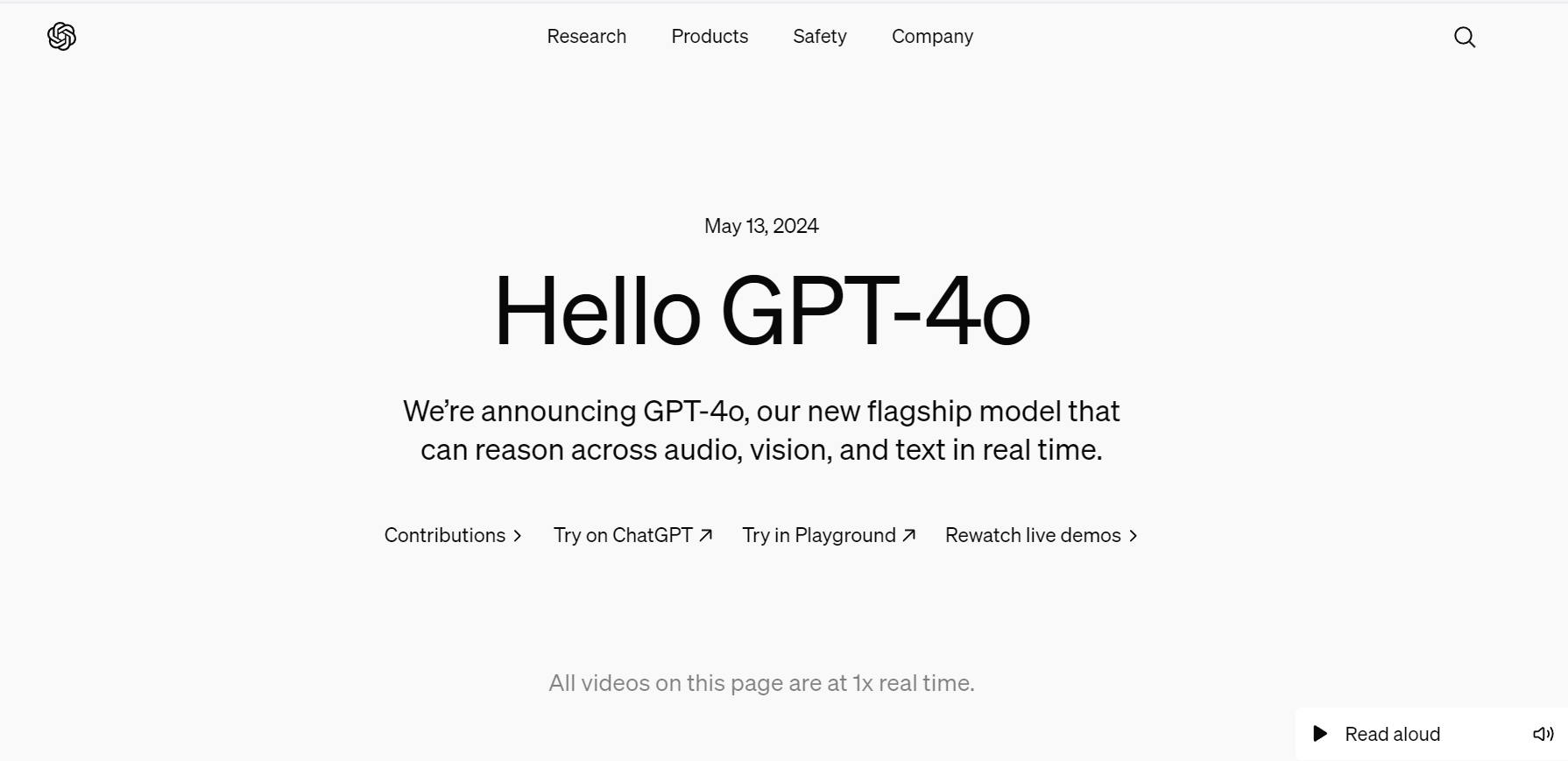
OpenAI has announced its latest large language model, GPT-4o, which is set to revolutionize the capabilities of ChatGPT and other AI-driven applications. This new model offers enhanced performance across multiple modalities, including text, speech, and vision. This article delves into the technical aspects of GPT-4o and explores its potential applications.
 Overview of GPT-4o
GPT-4o, where the “o” stands for “omni,” signifies a significant leap in AI technology. Building on the capabilities of GPT-4, GPT-4o integrates advanced features that make ChatGPT more interactive and versatile. The model enables real-time spoken conversations, text interactions, and the ability to analyze and discuss visual content such as screenshots, photos, and documents. This multimodal functionality positions GPT-4o as a comprehensive digital assistant.
Key Enhancements
- Multimodal Capabilities: GPT-4o can process and generate text, images, and speech. This allows users to engage with ChatGPT in more natural and diverse ways, such as uploading a photo or screenshot and having an in-depth discussion about its contents. For example, users can ask for analysis of a chart or a translation of a document’s content, providing a richer and more interactive user experience.
- Memory and Learning: The model now includes memory capabilities, enabling it to remember previous conversations with users. This feature enhances the continuity of interactions and allows the model to learn user preferences over time, making it more personalized and efficient.
- Real-Time Translation: GPT-4o supports over 50 languages, providing real-time translation and responses in multiple languages. This feature is particularly beneficial for users who require instant and accurate translations, improving accessibility and usability.
- Speed and Efficiency: GPT-4o is twice as fast as its predecessor, GPT-4 Turbo, and operates at half the cost. It can generate tokens at a rate that significantly enhances the responsiveness of applications using this model. This improvement is crucial for real-time applications, where speed and efficiency are paramount.
Practical Applications
- Enhanced Interaction: The voice mode in GPT-4o allows users to have spoken conversations with ChatGPT. The model can detect user voice nuances, respond in different emotive styles, and even sing. This makes interactions more natural and engaging, akin to conversing with a human assistant.
- Advanced Vision Capabilities: GPT-4o can analyze visual content and answer related questions. For example, it can identify the brand of a shirt from a photo or explain the contents of a software code displayed on a screen. This capability is invaluable for applications requiring detailed image analysis and description.
- Desktop and API Integration: OpenAI has introduced a desktop app for macOS that incorporates GPT-4o’s capabilities, allowing users to interact with the model via keyboard shortcuts or discuss screenshots. Additionally, developers can access GPT-4o through the API, which supports text and vision inputs. This API is designed to be 2x faster and 50% cheaper than GPT-4 Turbo, with higher rate limits, making it highly efficient for enterprise applications.
- Developer Tools: OpenAI’s GPT Store, now available to free tier users, provides tools for building custom chatbots. This feature democratizes access to advanced AI capabilities, enabling more users to create tailored AI solutions.
Safety and Limitations
While GPT-4o brings numerous advancements, it also comes with built-in safety features. These include filtering training data and refining the model’s behavior post-training to ensure safe interactions. The model has undergone extensive testing and red-teaming to identify and mitigate potential risks, particularly in its audio modalities.
GPT-4o is initially launching its audio capabilities to a select group of trusted partners to ensure safe and responsible use. The model is also designed to comply with OpenAI’s safety policies, which include limitations on generating audio outputs and restrictions on certain types of content to prevent misuse.
Conclusion
OpenAI’s GPT-4o offers enhanced multimodal capabilities, memory, real-time translation, and greater efficiency. Its integration into ChatGPT and other platforms will provide users with a more natural and engaging experience while also offering powerful tools for developers to create custom AI applications. As OpenAI continues to refine and expand GPT-4o’s capabilities, it is poised to set new standards in the field of artificial intelligence.