
Revolutionizing Finance with Generative AI
As we stand at the precipice of a technological renaissance within the financial services industry, the infusion of generative artificial intelligence (GenAI) portends a seismic shift in the sector’s value creation. Ernst & Young (EY) presents a future where GenAI’s influence augments the industry’s gross value added (GVA) by an astonishing $66-80 billion by 2030. The enthusiasm surrounding GenAI is evident, with a sweeping 78% of sector professionals actively integrating or planning pilot projects within the ensuing year, foreshadowing a profound transformation in the provision of customer services and the streamlining of operations. The palpable impact of GenAI spans several dimensions:
- Enhancing Customer Experience: An overwhelming consensus of 94% among industry experts anticipates that GenAI will dramatically enhance the quality of customer interactions, suggesting a transition towards services that are both personalized and responsive.
- Streamlining Costs: A notable 78% of the respondents predict GenAI to be a harbinger of cost-efficiency, reflecting AI’s inherent ability to automate and refine operational processes, thereby reducing expenses.
- Catalyzing Innovation: Moreover, 61% of those surveyed view GenAI as an innovation driver, implying a wave of novel services and transformative business models poised to redefine the financial landscape.
Mustafa Suleyman and the Dawn of Interactive AI
The visionary co-founder of DeepMind, Mustafa Suleyman, delineates a future where AI’s potential transcends generative capabilities, ushering in an age of interactive AI. This new breed of AI systems is expected to transcend mere content creation, instead engaging dynamically with the environment to perform tasks autonomously, a development as transformative as it is controllable.
With his latest enterprise, Inflection, Suleyman aims to navigate AI into this interactive phase. His mission is to pioneer AI systems that are not only generative but also interact with a broader understanding of human directives, ensuring that AI’s burgeoning autonomy is complemented by a framework of robust regulations. Suleyman’s trajectory from activist work to AI policy at Google, and now to Inflection, is underscored by his enduring commitment to leverage technology for societal betterment.
Refining AI’s Precision: The Inner Workings of LoRA in Language Model Fine-tuning
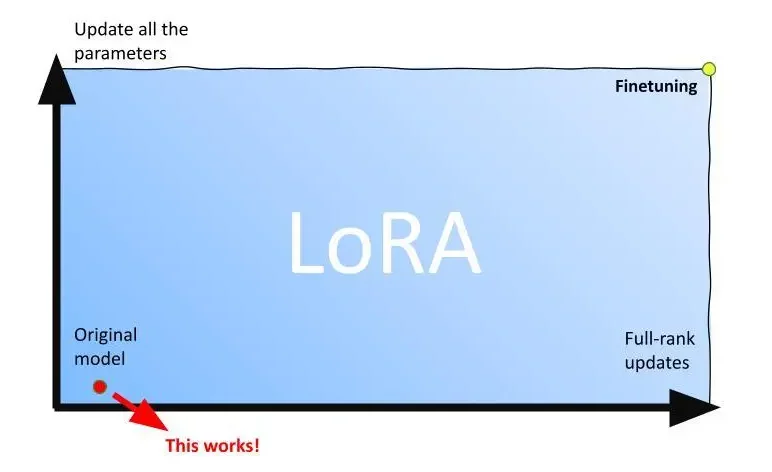
One of the latest and most significant innovations in the field of artificial intelligence, particularly in the context of language models, is the technique known as Low-Rank Adaptation (LoRA). This method has rapidly gained popularity for its ability to efficiently fine-tune large language models (LLMs) without the hefty computational cost typically associated with such endeavors. Let’s delve deeper into what LoRA entails and its pivotal role in AI advancement.
Unpacking LoRA: A Closer Look
At the core of LoRA’s appeal is its method of updating pre-trained weight matrices in neural networks. Traditionally, the fine-tuning process involves updating a weight matrix—often comprising billions of parameters, reflective of an LLM’s expansive knowledge base. However, LoRA introduces a strategy that circumvents the need to adjust this entire matrix directly.
Instead, LoRA employs two smaller matrices, denoted as A and B. The product of these matrices, A × B, approximates the full-weight update matrix ΔW. Essentially, this means that instead of recalculating and storing the colossal ΔW matrix, LoRA focuses on learning and adjusting these two smaller matrices during the training process. This results in a significant reduction in the amount of memory and computational power required.
Hyperparameters in LoRA: The Decisive Factors
The effectiveness and efficiency of LoRA depend on certain hyperparameters—the most crucial being the inner dimension, denoted as r. This hyperparameter is decisive as it dictates the number of parameters that are effectively updated during fine-tuning. Selecting an appropriate value for r is a delicate balancing act: it needs to be large enough to allow the model to adapt and learn new tasks yet not so extensive as to permit overfitting or make the process computationally prohibitive.
Another critical hyperparameter in the LoRA equation is the alpha (α) scaling coefficient. In LoRA’s application, a scaling factor calculated as alpha / r is applied to the product of matrices A and B. This factor determines the extent to which the LoRA matrices influence the original pre-trained weights during the forward pass of the model. The choice of alpha, about r, can have a pronounced impact on the model’s performance, thus requiring careful calibration.
Implementing LoRA: Beyond Key and Value Matrices
The application of LoRA extends beyond the Key and Value matrices traditionally associated with transformer layers in neural networks. By applying LoRA to additional layers, such as Queries and Outputs, the language model gains increased potential to learn and adjust to specific tasks. This comprehensive approach has been observed to significantly boost performance, suggesting that a language model’s capacity to adapt is amplified when LoRA is uniformly applied across its architecture.
Optimization and Learning Rates with LoRA
Another key element in fine-tuning LLMs with LoRA is the optimization of the learning rate. This involves the use of learning rate schedules, such as cosine annealing, which intuitively adjust the learning rate in a manner akin to a natural deceleration, optimizing the model’s learning trajectory as it becomes more adept.
LoRA’s Memory Efficiency: A Notable Advantage
A salient concern in LLM fine-tuning is memory demand. However, experiments have shown that even when coupled with memory-intensive optimization algorithms like Adam or AdamW, LoRA’s requirement for updating a fewer number of parameters means that the overall memory usage is not significantly impacted. This revelation positions LoRA as a highly advantageous approach for AI practitioners working within the constraints of limited computational resources.
Conclusion
The narratives from these AI advancements weave a tale of enormous potential moderated by mindful stewardship. The financial industry’s embrace of AI for advancement and enhanced services is paralleled by thought leaders advocating for AI systems that complement human abilities with respect and ethical consideration. Simultaneously, innovations like LoRA signify the ongoing evolution of operational AI aspects, enabling more efficient and inclusive model training.
In synthesis, these developments portray a future where AI is intricately woven into our economic systems, creative processes, and interactions, promising a landscape where artificial intelligence not only supports but also enriches human life and societal progress.