Recent developments by two significant players, Canva and GitHub, offer valuable insights into the integration and expansion of AI technologies. This article delves into the technical aspects of Canva’s acquisition of Leonardo.ai and GitHub’s launch of GitHub Models, emphasizing their implications for the future of AI-driven applications.
Canva’s Strategic Acquisition of Leonardo.ai
Canva’s recent acquisition of Leonardo.ai highlights its commitment to broadening its generative AI capabilities. Leonardo.ai, a startup focused on generative AI, originally specialized in creating video game assets. However, the startup expanded its platform to cater to various industries, including fashion, advertising, and architecture. Leonardo.ai offers a range of tools, including video generators and APIs, that allow customers to build their technology infrastructure on top of Leonardo’s platform.
- Technical Integration: Canva plans to integrate Leonardo.ai’s technology into its Magic Studio generative AI suite. This integration is expected to enhance existing tools and introduce new capabilities powered by Leonardo’s models. Given Canva’s previous acquisitions and internal developments, this move is part of a larger strategy to create an AI-powered workflow for generating images and designs.
- Model Training and Data: One key technical aspect to consider is how Leonardo.ai trains its in-house generative models, such as its flagship model, Phoenix. While the company has not disclosed specific details, it is crucial to understand the implications of using licensed, synthetic, and open-source data for model training. This practice aligns with industry trends but raises questions about the legal and ethical considerations of training AI on potentially copyrighted content.
- User Control and Customization: Leonardo.ai differentiates itself from other generative AI platforms by providing users with significant control over the output. For example, its Live Canvas feature allows users to create photorealistic images by combining text prompts with quick sketches. This level of customization is particularly important for professionals in creative industries who require precise control over the final product.
GitHub Models: Empowering AI Engineers
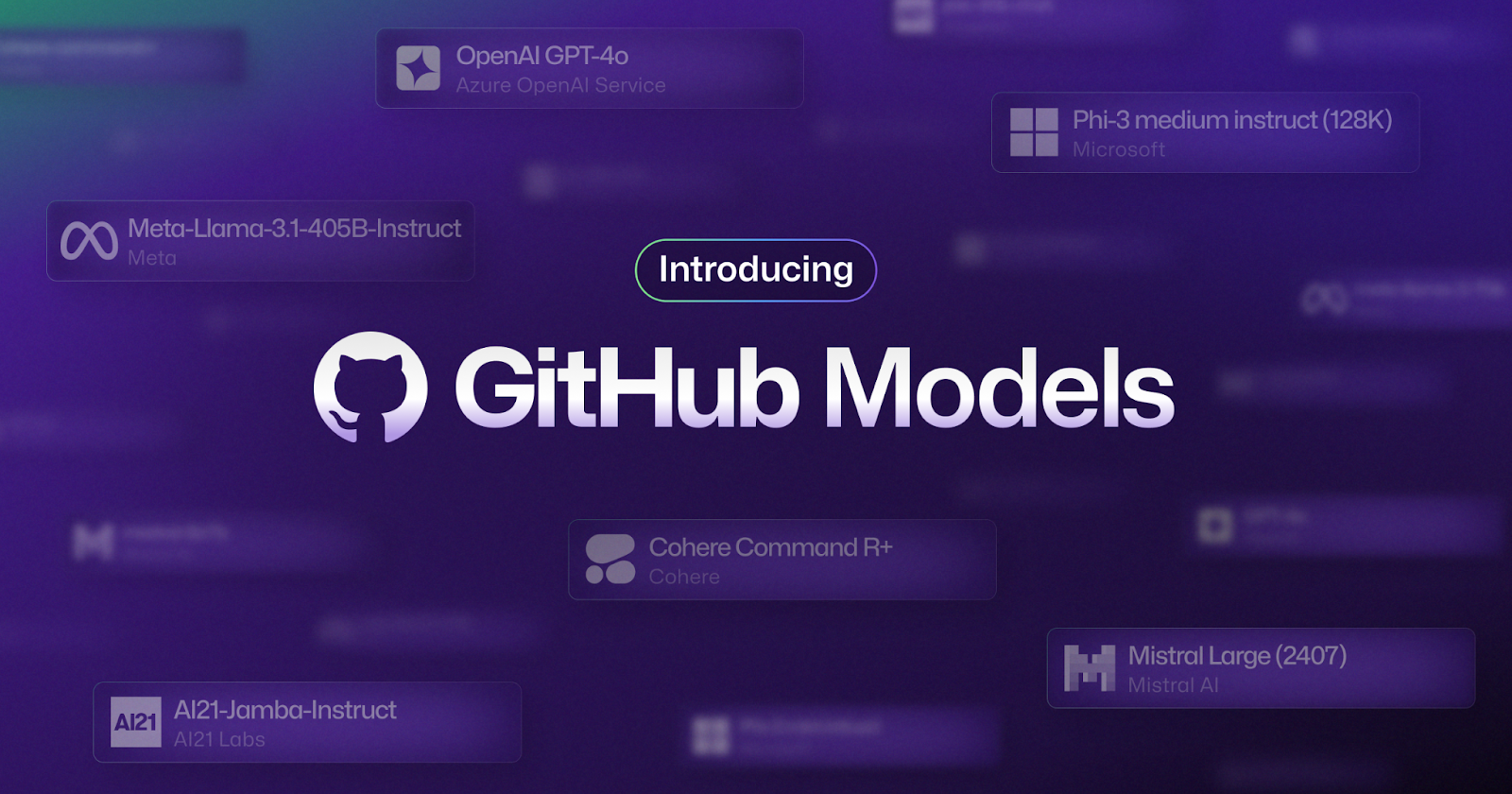
GitHub has introduced GitHub Models, a new initiative aimed at democratizing access to AI models for over 100 million developers. This platform provides a comprehensive environment for building, testing, and deploying AI models, directly integrated with GitHub’s existing ecosystem.
- Model Playground: The GitHub Models platform includes an interactive playground where developers can experiment with a variety of AI models, such as Llama 3.1, GPT-4o, and Mistral Large 2. This playground is designed to facilitate learning and experimentation, allowing developers to test different prompts and model parameters without the need for extensive setup.
- Codespaces Integration: GitHub Models is seamlessly integrated with Codespaces, providing a frictionless transition from experimentation to production. Developers can test model inference code in a controlled environment and then easily incorporate it into their projects. This integration simplifies the development process and reduces the common “works on my machine” issues that often arise during deployment.
- Azure AI and Production Deployment: Once developers are ready to deploy their AI applications, GitHub Models offers a streamlined path to production through Azure AI. Azure provides enterprise-grade security, data privacy, and global availability, ensuring that AI applications can be deployed at scale with confidence.
- Responsible AI: GitHub’s commitment to responsible AI is evident in its approach to privacy and security. Prompts and outputs within GitHub Models are not shared with model providers, nor are they used to train or improve the models. This focus on responsible AI practices is essential as the industry continues to grapple with the ethical challenges posed by AI technologies.
The developments by Canva and GitHub mark significant advancements in the field of generative AI. Canva’s acquisition of Leonardo.ai and GitHub’s launch of GitHub Models demonstrate how companies are integrating AI technologies to enhance their offerings and empower developers. By providing robust platforms for experimentation, customization, and deployment, these initiatives are paving the way for a new generation of AI-driven applications.
As AI continues to evolve, the emphasis on responsible practices, user control, and seamless integration will be key to ensuring that these technologies are not only powerful but also accessible and ethical. These lessons from Canva and GitHub offer valuable insights for developers, AI engineers, and companies looking to harness the potential of generative AI in their own projects.