
Deprecated: Using null as an array offset is deprecated, use an empty string instead in /home/u876752588/domains/capria.vc/public_html/wp-content/plugins/jet-engine/includes/components/blocks-views/dynamic-content/manager.php on line 113
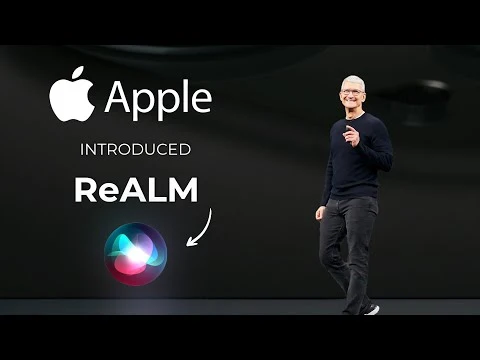
Apple has made significant strides in the development of its large language model, ReALM, claiming it outperforms OpenAI’s GPT-4 in reference resolution tasks. This achievement marks a notable advancement in how artificial intelligence understands and processes user references within a conversation.
What is Reference Resolution?
Reference resolution involves identifying what specific words or phrases refer to in a conversation. For instance, when someone uses terms like “they” or “that,” the context determines their meaning. Solving this issue is crucial for creating more intuitive and user-friendly AI chatbots that can interact naturally with users.
How ReALM Achieves Superior Performance
Apple’s ReALM model is designed to excel at recognizing and interpreting different types of entities within a digital environment. These include:
- Onscreen Entities: Items currently displayed on a user’s screen.
- Conversational Entities: Elements previously mentioned or relevant to the ongoing conversation.
- Background Entities: Objects or occurrences that are not actively displayed or discussed but may still be relevant, like background music or notifications.
In their recent paper, Apple researchers demonstrated that even their smallest ReALM model shows more than a 5% improvement in handling on-screen references compared to previous systems. When compared to GPT-3.5 and GPT-4, ReALM’s smaller model matches GPT-4’s performance, while larger models significantly surpass it.
The Importance of This Development
The ability to accurately resolve references enhances the potential for AI to support a truly hands-free interaction, where users can refer to any item on their screen or in their environment simply by using natural language. This capability is particularly valuable in scenarios where users need to interact with their devices while simultaneously engaging in other tasks.
Future Implications for Apple Products
While Apple has not specified how ReALM will be integrated into its products, the development of such advanced AI capabilities suggests potential enhancements to iOS and macOS that could make Apple devices even more interactive and responsive to user commands.
Conclusion
Apple’s ReALM model’s prowess in reference resolution signals a significant step forward in the development of AI that can seamlessly integrate into our daily lives. By improving how machines understand context and references, Apple is paving the way for more sophisticated and accessible AI-driven interactions.