In today’s AI-driven world, organizing unstructured data into structured knowledge is key for solving complex problems. Two interesting case studies temporal medical records transformed into knowledge graphs and generating AI-powered insights from complex datasets highlight the potential of combining generative AI (GenAI) with structured systems like Knowledge Graphs. Here’s what we can learn from these implementations.
1. Turning Medical Transcripts into Knowledge Graphs
How It Works:
Medical records and transcripts often contain detailed patient history information, but it’s unstructured and hard to analyze. By converting this data into temporal knowledge graphs, we can:
- Represent key relationships like patient conditions, immunizations, and observations in a graph.
- Tie summarized chunks of text (e.g., “Flu shot given on 2024-08-05”) to graph nodes for easy retrieval.
- Use vector search to identify relevant relationships and display structured answers.
Key Steps:
- Data Extraction: Transcripts are converted into structured JSON using GenAI models like Claude. This ensures compatibility with the knowledge graph schema.
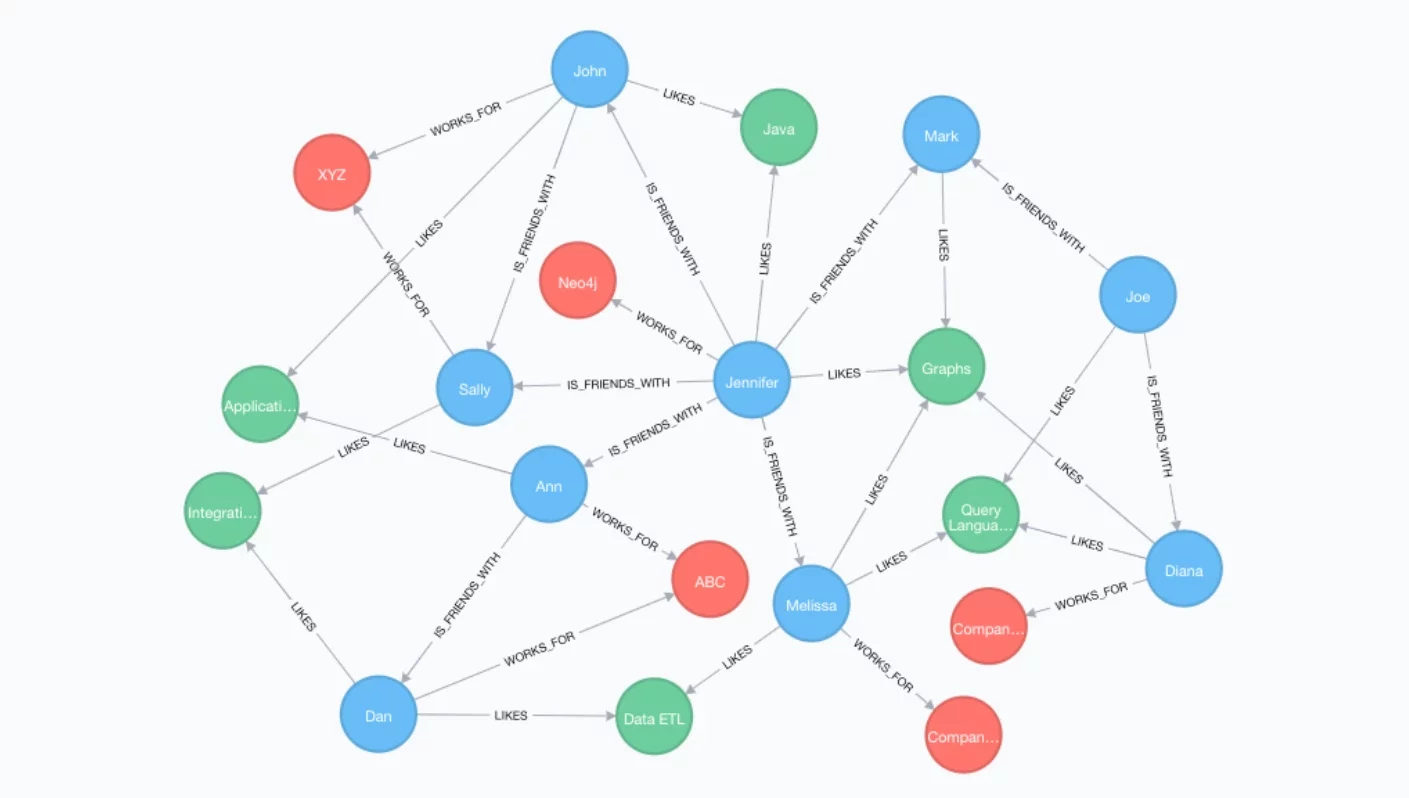
- Graph Representation: Entities like “Patient,” “Condition,” and “Immunization” are connected with relationships like “received” or “has_condition.”
- Temporal Logic: Graphs allow tracking of events over time, such as when a patient received a vaccine or experienced symptoms.
Benefits:
- Enables detailed queries like “What conditions have Patient X been diagnosed within the last year?”
- Helps track temporal patterns, such as seasonal conditions like bronchitis.
- Provides aggregated insights across multiple patients or medical histories.
2. Structured RAG for Reliable AI Answers
Retrieval-augmented generation (RAG) often relies on vector search to fetch data, but adding a knowledge graph layer improves reliability. Here’s how it works:
- Knowledge Graphs Complement Vectors: Graphs store definitive facts (e.g., “Patient X has bronchitis”) that vector systems may miss. This ensures accuracy when verifying conditions or histories.
- Multi-Transcript Analysis: Aggregating data from multiple sources helps create complete patient profiles. For instance, combining transcripts to trace how a condition evolved.
- Temporal Queries: Adding timestamps to relationships in the graph supports advanced temporal reasoning, like “Which conditions did Patient Y have before 2024?”
Example Queries:
- Patient-Level Analysis: “Which patients had both viral sinusitis and bronchitis?” The knowledge graph ensures patients without these conditions are not mistakenly included.
- Multi-Transcript Insights: “What was the sequence of events for Patient Z with otitis media?” The graph ties together all encounters and observations.
3. Why This Approach Stands Out
Unique Features:
- Embedded Relationships: Instead of text-to-query (e.g., Text2Cypher), triples are directly retrieved via vector embeddings, improving speed and accuracy.
- Chunk Summarization: Key insights (e.g., immunization records) are tied to graph nodes for direct retrieval.
- Temporal Data Simplified: Instead of forcing time into the graph schema, GenAI filters for temporal relationships, making modeling easier.
Business Impact:
- Healthcare: Track and analyze patient conditions, treatments, and outcomes over time for better decision-making.
- Multi-Domain Applications: From education to finance, the same principles can simplify data retrieval and enhance analytics.
4. Steps to Build Such Systems
Data Preparation:
- Use GenAI tools to extract structured JSON from unstructured sources like transcripts or documents.
- Define a schema that represents key entities and relationships.
Graph Creation:
- Map the structured data to nodes and relationships in a knowledge graph.
- Link summarized chunks of text to specific nodes for enhanced retrieval.
Querying Insights:
- Combine vector search with graph traversal for accurate, context-aware answers.
- Use temporal relationships to filter results based on time.
Conclusion: AI Meets Structure
Combining GenAI with knowledge graphs bridges the gap between unstructured data and actionable insights. Whether you’re working with medical records, academic research, or customer data, this approach ensures reliable and detailed answers to complex questions. By focusing on structured representations and leveraging temporal logic, businesses can unlock new levels of analytics and decision-making.