
Deprecated: Using null as an array offset is deprecated, use an empty string instead in /home/u876752588/domains/capria.vc/public_html/wp-content/plugins/jet-engine/includes/components/blocks-views/dynamic-content/manager.php on line 113
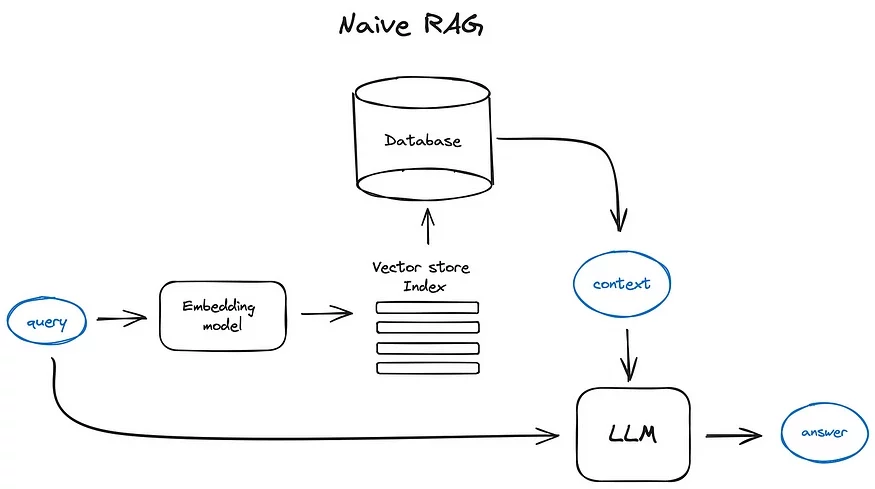
The Problem
In the rapidly evolving field of large language models (LLMs) and information retrieval, the ability to efficiently process and vectorize diverse data sources is critical. Documents today are rarely uniform—many contain a mix of text and images, such as reports, research papers, or PowerPoint presentations (PPTs).
Extracting meaningful information from these hybrid resources and storing it in a vector database for downstream tasks (e.g., semantic search, question answering) poses significant challenges. Traditional vectorization techniques (“naive vectorization”), rely on a binary approach: either process everything as text or as images. However, this oversimplification fails when documents blend both formats, leading to inefficiencies in resource usage, processing time, and accuracy.
Naive vectorization typically involves a flag-based mechanism—say, a variable like flag—to determine whether a document should undergo text-based vectorization or image-based vectorization using vision transformers or multimodal models like GPT 4o.
When flag = false, the system assumes text-only content and processes it accordingly; when flag = true, it assumes image-only content and applies image vectorization. But what happens when a document contains both? Processing the entire document as an image is possible but computationally expensive, generating an overwhelming number of image tokens and introducing unnecessary overhead.
Extracting text from images using optical character recognition (OCR) or language models, then segmenting and vectorizing it, adds further complexity, cost, and latency. Meanwhile, text-only processing ignores critical visual context, especially in formats like PPTs where images and accompanying text are interdependent.
The Solution
To address these inefficiencies, we propose a smarter vectorization strategy that selectively prioritizes text extraction and resorts to image vectorization only when necessary. This reduces computational costs while maintaining high retrieval accuracy.
Step by Step breakdown of the Optimized Vectorization Process:
Step 1: Prioritizing Text Extraction
- The system first attempts text extraction from the document.
- If the document contains sufficient textual data, it is vectorized and stored in the database.
- This method avoids unnecessary image vectorization when text alone is enough.
Step 2: Conditional Image Vectorization
- If no text is found, the system switches to image vectorization for that specific page or section.
- Instead of processing the entire document as an image, only relevant pages or slides are vectorized.
- This approach minimizes the token overhead and computational load.
Step 3: Handling Mixed-Format Documents (PPTs, PDFs, etc.)
- PowerPoint slides (PPTs) require special handling as they contain both text and visual elements in unstructured layouts.
- In these cases, we convert the PPT slides to an image and then use a vision model to transcribe everything it can read.
- If an image has explanatory text, both are stored together, avoiding information loss.
Step 4: Efficient Storage & Retrieval
- The text embeddings are then stored in the vector database.
- When retrieving data, the model can search based on text embeddings, providing accurate search results and ensuring optimal performance.
Benefits of this Approach:
Lower Computational Costs – Image processing is only used when necessary, reducing resource consumption.
Faster Processing – Prioritizing text avoids unnecessary image embedding calculations.
Improved Accuracy – Contextual understanding is enhanced by linking text and image embeddings intelligently.
Optimized Retrieval – Vector searches are more precise, enabling efficient data access in LLM-powered applications.
Final Thoughts
Smart vectorization prioritizes text extraction and uses conditional image vectorization to reduce computational costs and processing time while enhancing retrieval accuracy, which is crucial for handling mixed-format documents.