Deprecated: Using null as an array offset is deprecated, use an empty string instead in /home/u876752588/domains/capria.vc/public_html/wp-content/plugins/jet-engine/includes/components/blocks-views/dynamic-content/manager.php on line 113

Microsoft’s research on Retrieval-Augmented Generation (RAG) categorizes queries into four distinct levels based on complexity and the reasoning required. This framework helps AI systems like large language models (LLMs) to effectively retrieve, interpret, and respond to different types of user questions. Let’s dive into each level and understand how it works.
Level 1: Explicit Fact Queries
What It Is:
Explicit fact queries are straightforward and involve directly asking for a known piece of information. The LLM simply retrieves the exact answer from the data without needing additional reasoning or interpretation.
Example:
“Which country is hosting the UEFA EURO 2024?”
The AI looks up the data and returns: “Germany.”
Key Features:
- Direct Retrieval: No complex analysis is required; the answer is a specific fact.
- Minimal Processing: The system’s main task is to locate and extract the relevant information from structured data or documents.
Use Case:
This level is perfect for FAQs, where users ask simple, factual questions like “What is the capital of France?” or “What is the release date of the new iPhone?”
Level 2: Implicit Fact Queries
What It Is:
Implicit fact queries require the AI to piece together information from multiple sources. The facts are not immediately obvious and need logical connections to find the answer.
Example:
“What is the majority party now in the country where Canberra is the capital?”
The AI must know that Canberra is the capital of Australia and then check which political party currently holds the majority in Australia.
Key Features:
- Basic Reasoning Required: The AI needs to infer the answer by connecting related pieces of information.
- Cross-Referencing: The system combines data from multiple sources or segments to arrive at the response.
Use Case:
Useful in scenarios where the answer is not explicitly stated, such as gathering insights from multiple news articles or combining data points in business reports.
Level 3: Interpretable Rationale Queries
What It Is:
At this level, the AI must go beyond simple fact-finding. It needs to provide a reasoning process or explanation based on external guidelines, domain knowledge, or predefined rules. The focus is on interpreting the data and justifying the answer.
Example:
“Is the company’s financial report compliant with the new IFRS guidelines?”
The AI must check the report against specific regulatory guidelines and explain why it complies or doesn’t comply.
Key Features:
- Contextual Understanding: Requires the AI to apply domain-specific rules or regulations.
- Rationale Explanation: The model provides not only the answer but also a clear, logical explanation based on external references.
Use Case:
Ideal for applications in finance, law, or technical support, where responses must adhere to specific regulations or protocols. For instance, answering if a tax form is filled out correctly based on IRS rules.
Level 4: Hidden Rationale Queries
What It Is:
Hidden rationale queries are the most complex. They involve deep reasoning where the answer depends on context-based insights and patterns that are not explicitly stated. The AI must use learned knowledge and previous experiences to infer the answer.
Example:
“Predict the impact of rising interest rates on this tech company’s future growth.”
The AI needs to analyze historical data, financial trends, and economic indicators to provide a reasoned prediction about the company’s growth.
Key Features:
- Advanced Inference: The AI relies on patterns and insights gained from past data rather than explicit facts.
- Contextual Analysis: Requires deeper understanding and synthesis of information, often needing multiple data points or historical context.
Use Case:
Useful in predictive analytics, strategic planning, and complex problem-solving. For instance, in medical diagnostics, the AI might infer a diagnosis based on symptoms and historical patient data even if the condition is rare.
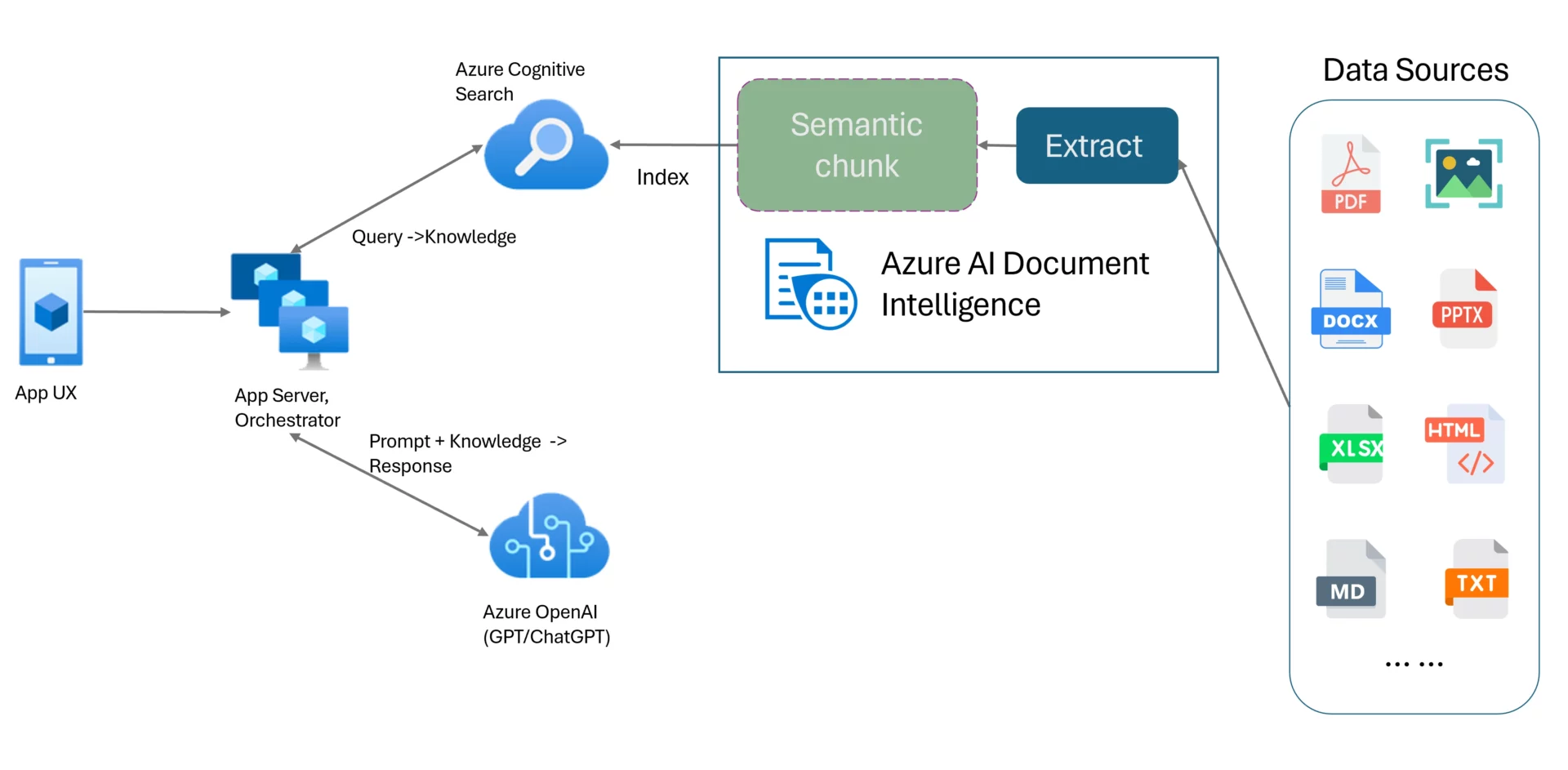
How to Apply These RAG Levels in AI Systems
- Identify Query Type:
Understanding the query type helps determine the appropriate RAG approach. Explicit fact queries need simple data retrieval, while hidden rationale queries require deeper reasoning.
- Use External Knowledge Sources:
For levels 3 and 4, integrating external guidelines or historical data can enhance the AI’s ability to provide accurate and reasoned responses. - Fine-Tune Models for Complex Reasoning:
For implicit fact and hidden rationale queries, consider fine-tuning the model using domain-specific datasets or additional reasoning tasks to improve its interpretative capabilities.
Microsoft’s four levels of RAG provide a structured approach to handling different types of queries, ranging from simple fact retrieval to complex reasoning tasks. By categorizing queries based on their complexity, AI developers can tailor their RAG implementations to deliver more precise and context-aware responses. This framework is a useful tool for building better retrieval-augmented systems, enhancing both user experience and response accuracy.
Understanding these levels helps in creating more robust AI solutions, allowing models to not only answer questions but also provide meaningful explanations and insights, making them valuable across diverse applications like customer support, finance, and predictive analytics.