Deprecated: Using null as an array offset is deprecated, use an empty string instead in /home/u876752588/domains/capria.vc/public_html/wp-content/plugins/jet-engine/includes/components/blocks-views/dynamic-content/manager.php on line 113
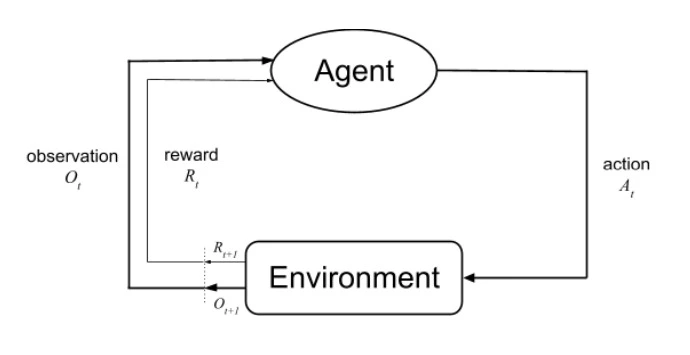
Reinforcement Learning (RL) is a cutting-edge technique where an agent learns to make decisions through continuous interaction with its environment. By receiving rewards for correct decisions and penalties for mistakes, the agent optimizes its actions over time. This approach has been successfully applied to fields like self-driving cars and self-driving labs (SDLs) for automating complex processes efficiently.
1. RL for Self-Driving Cars
How It Works: RL simplifies the self-driving problem by using an end-to-end learning approach, where a single neural network makes decisions based on inputs like road images, rather than relying on a modular system. This makes the process generalized and reduces dependency on specialized components like LIDAR and advanced mapping data.
Key Components:
- Agent: The driving system making decisions.
- Environment: The car’s surroundings, including road conditions and camera feeds.
- State: The current condition of the car, derived from inputs like camera images or speed.
- Actions: Decisions such as steering, braking, and accelerating.
- Reward: Positive feedback for staying in the lane and driving safely. For example, “distance traveled without intervention” is rewarded.
- Policy (Actor): A neural network that determines the best actions to take.
- Value Function (Critic): Assesses how good a particular action or state is by predicting the expected long-term reward.
RL Workflow for Driving:
- Initialization: The RL agent starts with random weights and no knowledge of the task.
- Exploration: The agent takes random actions to interact with its environment and collect data.
- State Transition: The environment responds, updating the car’s state and providing a reward.
- Learning:
- Critic Network evaluates the reward and improves predictions of the Q-value (expected reward).
- Actor Network updates its strategy based on feedback from the critics.
- Replay Buffer: Previous actions, states, and rewards are stored and reused to stabilize training.
- Simulation Pre-Training: Simulated environments (e.g., Unreal Engine) tune hyperparameters like learning rates and action strategies before deploying in the real world.
- Iteration: The process repeats as the agent gradually refines its ability to drive autonomously.
Advantages of RL in Self-Driving:
- Generalization: RL can handle unmapped rural roads or areas where LIDAR and detailed mapping are unavailable.
- Simplified System: It removes the complexity of modular systems that require stitching together multiple algorithms.
Challenges:
- Sparse Rewards: Rewards occur infrequently (e.g., staying in the lane), which slows learning.
- Delayed Rewards: Rewards are often delayed, making it hard to link actions to outcomes.
- High Dimensionality: The RL agent must process high-dimensional inputs like video feeds and continuous action spaces, which increases training complexity.
2. RL for Self-Driving Labs (SDLs)
In research labs, RL is now automating chemical synthesis workflows, helping researchers optimize multi-step chemical processes quickly. One example is the AlphaFlow system, which applies RL to nanoparticle synthesis.
Core Problem:
Traditional experimental processes face the curse of dimensionality, where the parameter space grows exponentially with each step in a workflow. RL solves this problem by intelligently exploring and optimizing the experimental sequences.
How RL Works in Self-Driving Labs:
- Agent: Decides the next step in a chemical process (e.g., reagent addition, timing, or washing).
- Environment: A micro-droplet flow reactor automates chemical synthesis experiments.
- State: Consists of the current setup, reaction parameters, and recent experimental history.
- Actions: Decisions on adding reagents, adjusting timing, or applying wash steps.
- Reward: The system measures optical properties like absorption or photoluminescence to evaluate the outcome.
- Policy & Value Function:
- Belief Network: A combination of ensemble neural networks (ENN) and gradient-boosted decision trees predicts outcomes for state-action pairs.
- Rollout Policy: Simulates hypothetical actions and predicts the best sequence to maximize rewards.
RL Workflow for Labs:
- Pre-Training with Simulations: Similar to self-driving cars, RL for labs uses digital twins to optimize hyperparameters before running physical experiments. This saves costs and resources.
- Sequence Optimization: RL explores the vast experimental space step-by-step to identify optimal sequences of chemical actions.
- Outcome Analysis: The system continuously measures and learns from experimental results to refine its predictions and actions.
Benefits of RL in Labs:
- Efficient Exploration: Optimizes multi-step experiments with up to 40 parameters.
- Resource Savings: Automates labor-intensive, time-consuming tasks with precision.
- Scalable: RL can handle complex workflows in chemistry, biology, and material sciences.
Conclusion
Reinforcement Learning is a powerful tool for automating real-world tasks like driving and experimental labs. In self-driving cars, RL provides a generalized, simplified approach to autonomous navigation. In self-driving labs, it accelerate scientific discovery by intelligently optimizing complex experimental workflows.
Takeaway
RL’s ability to explore, learn, and optimize makes it a game-changer for automation in dynamic and high-dimensional environments. Whether it’s driving on roads or managing lab protocols, RL is paving the way for smarter, more efficient systems.