
Deprecated: Using null as an array offset is deprecated, use an empty string instead in /home/u876752588/domains/capria.vc/public_html/wp-content/plugins/jet-engine/includes/components/blocks-views/dynamic-content/manager.php on line 113
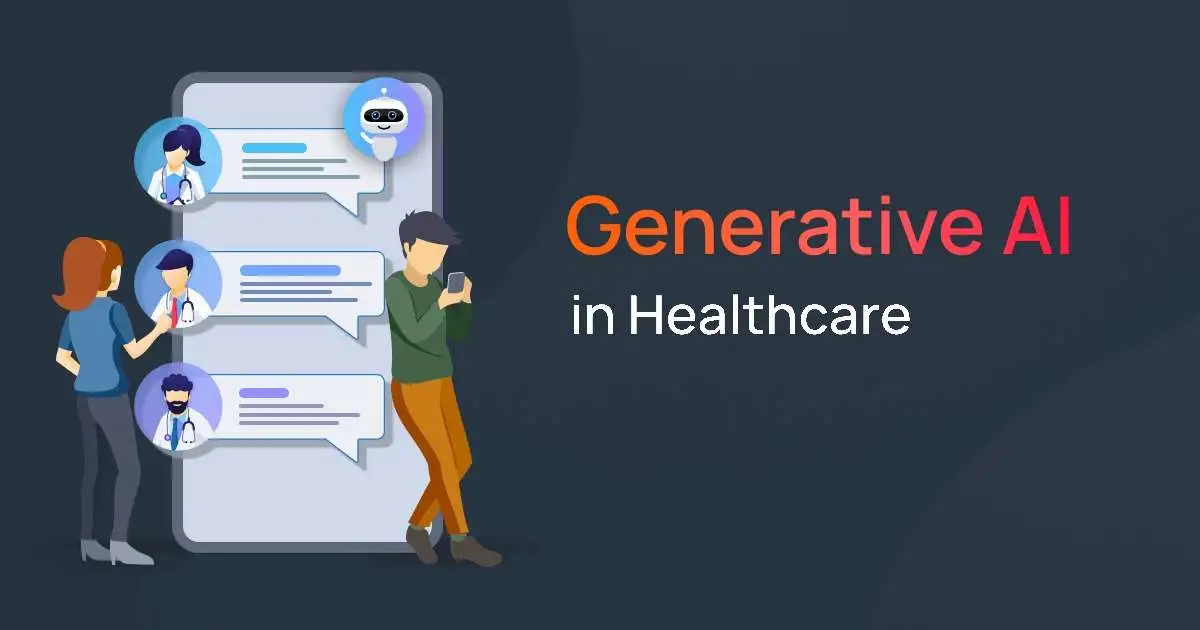
Generative AI redefines healthcare’s approach to patient treatment, drug discovery, medical imaging, and health management. Let’s dive into how it’s reshaping the industry.
Accelerating Drug Discovery
Using generative AI algorithms, the healthcare industry can now quickly identify and test potential drug candidates. These sophisticated algorithms are designed to predict how new drugs will interact within the body, allowing researchers to bypass lengthy initial testing phases and move promising compounds quickly into clinical trials.
Tailoring Patient Treatment
Treatment customization is a flagship feature of generative AI. By processing extensive data sets, including patient symptoms, history, and even genetic information, AI can recommend diagnoses and treatment plans that are unique to each individual’s health profile, moving away from the one-size-fits-all approach.
Advancing Diagnostic Imaging
In diagnostic imaging, generative AI’s contribution is twofold: enhancing the quality of existing images and creating synthetic yet realistic images for a broader training data set. This dual capability leads to more precise diagnostic outcomes, especially critical in early disease detection, where time is often of the essence.
Rethinking Population Health
Generative AI has the potential to revamp population health management with its ability to process complex demographic data, it provides key insights for developing public health strategies. This means that health initiatives can now be more accurately tailored to the needs of specific communities, with a focus on underserviced areas.
Challenges on the Horizon
- Data Privacy and Security: Strict adherence to data protection laws is paramount to maintaining patient trust and meeting regulatory standards.
- Eliminating Bias: Ensuring AI models are trained on diverse data sets is crucial to providing equitable care across all patient groups.
- Preventing Misuse: Constant vigilance is necessary to prevent an over-reliance on AI, which could lead to diagnostic errors or a devaluation of human expertise.
- Ethical Concerns: The ethical deployment of AI must be a top priority, particularly regarding its impact on healthcare employment.
Takeaway
Generative AI is reshaping the landscape of healthcare, bringing about a new era of innovation and patient-centric care. Its implementation, while not without its set of challenges, promises a future where healthcare is more accessible, accurate, and attuned to the needs of each individual. It’s an exciting time for those ready to harness the power of AI to transform the very essence of patient care and well-being.