What Are Diffusion Models?
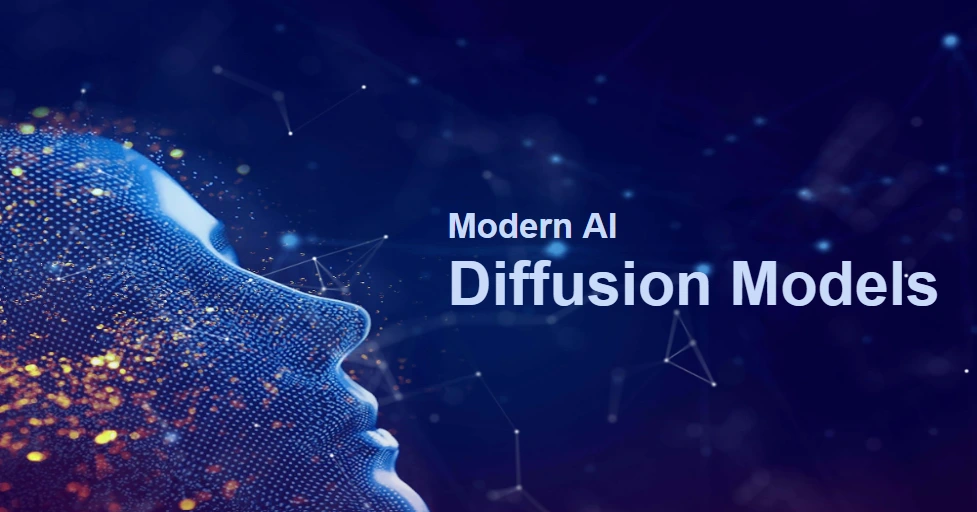
Diffusion models are a type of machine learning technique used to generate images, audio, and other types of data. They work by gradually adding noise to the data and then learning to reverse the process to create meaningful output. Essentially, it’s a clever way to teach a model to generate new data by learning how to “denoise” it.
How Do Diffusion Models Work?
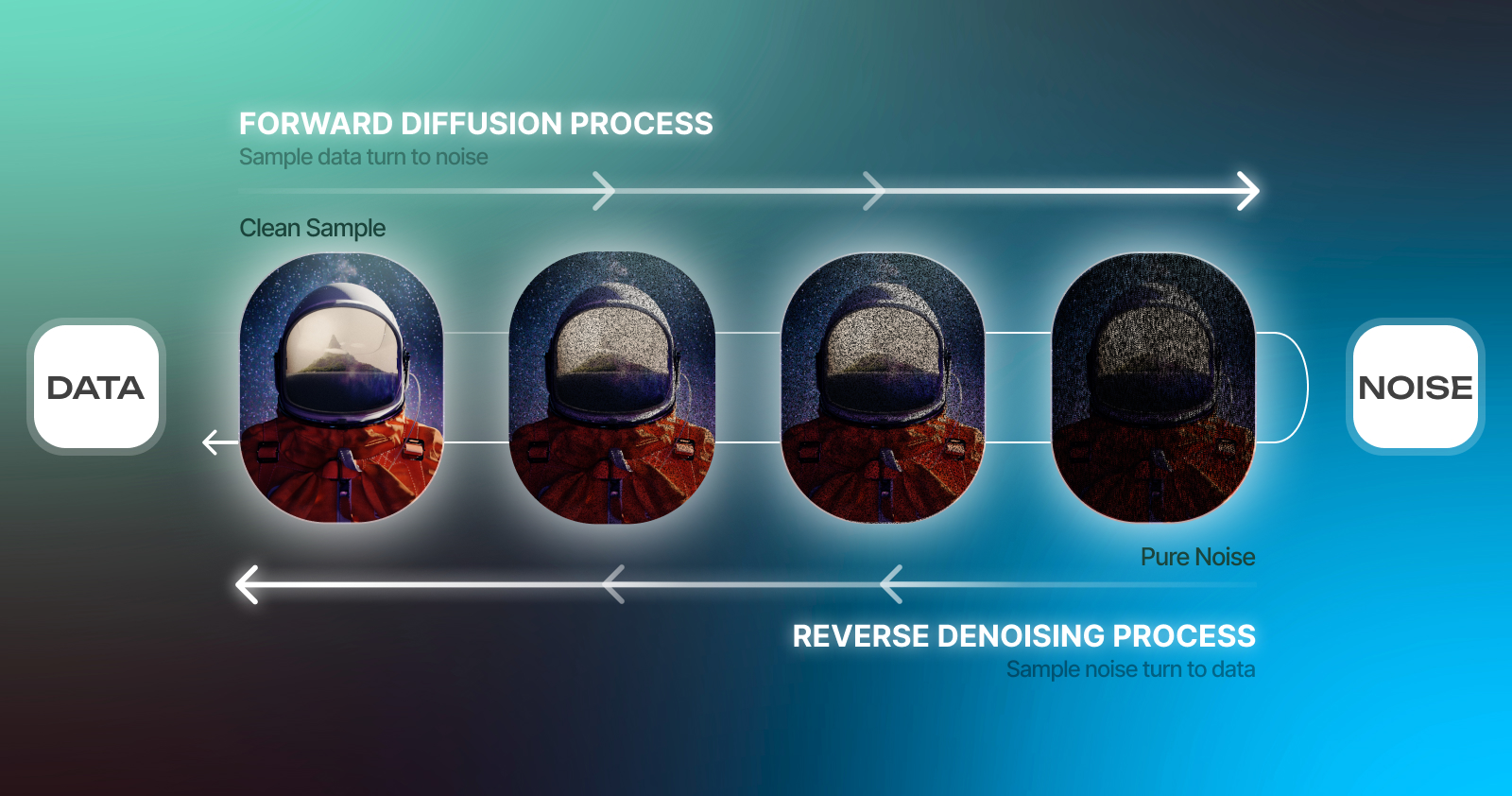
- Forward Process: The model slowly adds noise to data over multiple steps. By the end of this process, the data is almost entirely noise. Think of it like distorting a clear image step by step until it’s unrecognizable.
- Reverse Process: The model then learns to reverse this noise and reconstruct the original image or data. By doing this step-by-step, it generates new, clean data from the noisy input.
Main Steps Involved:
- Training: The model is trained to predict the noise added at each step. Instead of creating the image from scratch, it learns to remove noise at each stage.
- Sampling: Once trained, the model can generate new data by starting with random noise and gradually denoising it to produce meaningful output (like a new image or audio clip)
Key Characteristics:
- Markov Chain Process: Each step in the noise-adding and denoising process depends on the previous step.
- Noise Schedule: The amount of noise added at each step follows a set schedule, which is important for how well the model works.
- Learned Denoising: The model learns to predict how to reverse the noise added at each step, helping it recover the original data.
Types of Diffusion Models:
- Denoising Diffusion Probabilistic Models (DDPM): These are used frequently, especially for generating images.
- Score-Based Models: Instead of directly predicting noise, these models predict the gradient (or “score”) to remove noise by sampling.
- Conditional Diffusion Models: These models generate data based on specific conditions, like generating an image from a text prompt.
Applications:
- Image Generation: Diffusion models are commonly used for creating high-quality images.
- Text-to-Image Models: Models like DALL-E use diffusion models to generate images from text.
- Audio and Speech Synthesis: They are also useful for generating realistic audio and speech.
Advantages:
- Stability in Training: Diffusion models are generally easier to train compared to models like GANs (Generative Adversarial Networks) and are less likely to become unstable during training.
- High-Quality Outputs: With enough training, diffusion models can generate highly detailed and realistic images and data.
- Versatile: These models work across various domains, including images, audio, and even time-series data.
Drawbacks:
- Training Time: While diffusion models are stable, they can take a lot of time to train because they need to go through many steps to add and remove noise.
- Computational Cost: Running a diffusion model, especially for high-quality outputs, can be resource-intensive and requires powerful hardware.
Diffusion models are an impressive method in AI for generating realistic data. Although they require significant time and computational power to train, their ability to produce detailed and high-quality outputs makes them highly effective for tasks like image and audio creation. Despite these challenges, their stability during training and versatility across different types of data make them a valuable approach in the field of machine learning.