At the end of 2024, the conversation around AI was largely about “search”. We were using RAG to talk to our documents and LLMs to summarize our meetings. It was a helpful productivity boost, but it was not transformative.
The real breakthrough came starting 2025 when we stopped treating AI as a librarian and started treating it as a teammate. This marked our shift into Agentic AI, the systems designed not just to “know” things but to “do” things. By combining the speed of the “vibe coding” with a disciplined security layer, we have spent the last 12 months adapting Agentic Solutions internally and providing services to our portfolio companies.
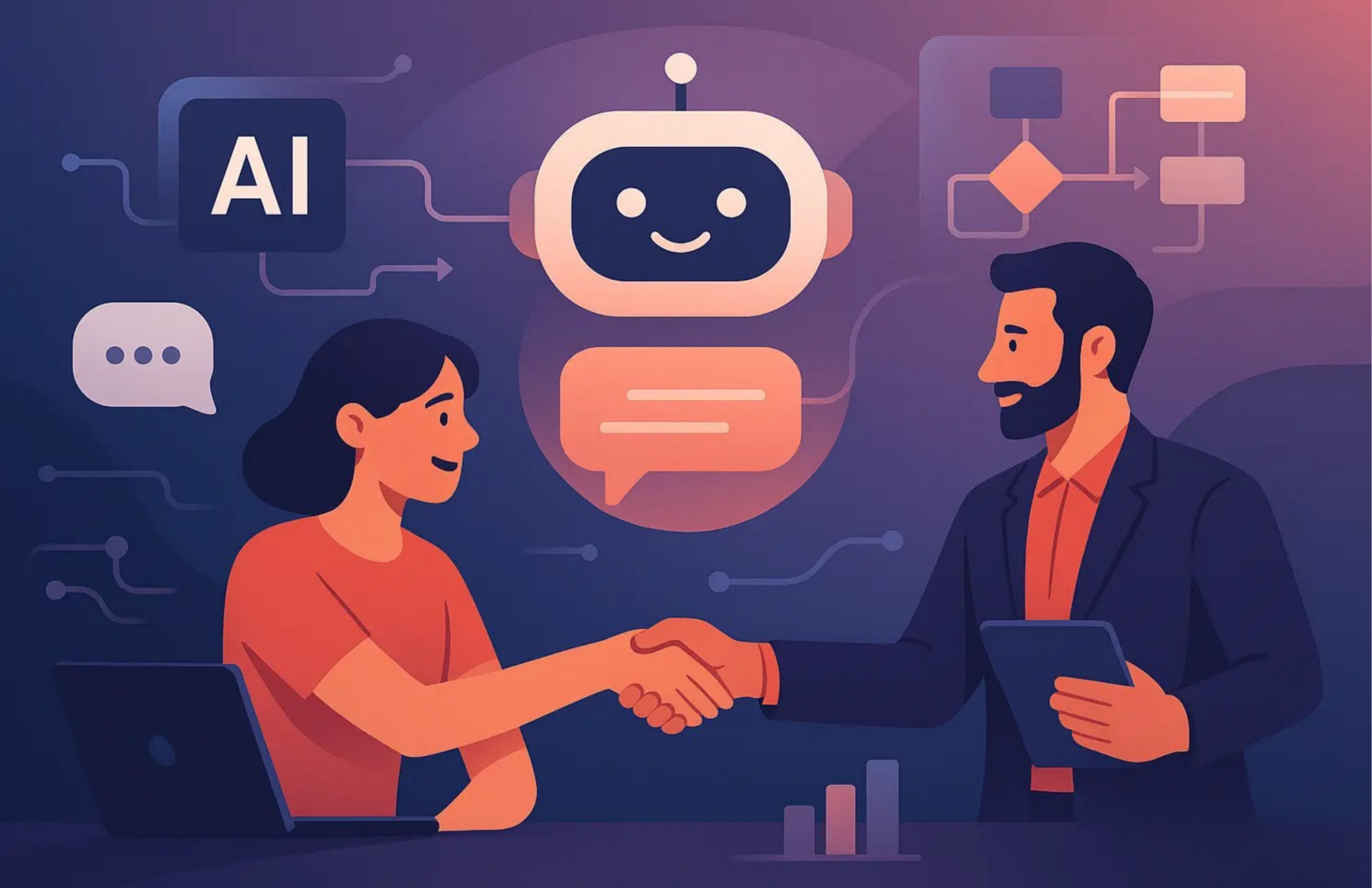
From Static Knowledge to Autonomous Action
The core of our evolution this year was moving beyond simple RAG. While RAG gave our AI a memory, the agentic approach gave it hands. We transitioned our internal workflows from “Ask a question, get an answer” to “Assign a goal, get a result.”
We focused on automating the “middle office” tasks that traditionally create a data entry for investment teams. Instead of humans manually moving data between the spreadsheets, CRMs, and project management tools like Asana, we deployed agents that orchestrate the entire process. These agents monitor signals, and update our internal platforms autonomously.
The goal was never to replace human judgment, but to ensure that by the time a human teammate looks at a deal or a contract, all the foundational legwork, the research, the categorization, and the data cleaning has already been completed.
Orchestrating at Speed: The Low-Code Advantage
The speed of this transition was made possible by a shift in our tech stack, moving the focus from “infrastructure” to “orchestration.” Rather than spending weeks building custom backends for every new idea, we leaned into a modular approach that prioritized time-to-value.
We utilized orchestration platforms like n8n, Make and Zapier to act as the central nervous system for our agents. These tools allowed us to connect LLMs to our everyday apps without getting bogged down in the “plumbing” of API authentications, webhook listeners, or error-handling loops. For the interface, we used platforms like Lovable to bridge the gap between backend logic and user experience. This allowed us to engage in vibe coding, iterating on functional prototypes in real-time. By offloading the operational heavy lifting to these platforms, we moved from an idea to a production-ready agent in days, keeping our focus on the logic of the workflow rather than the maintenance of the code.
Securing the Prompted Application
As our agents became more capable, the stakes for security became higher. We recognized that an application born from a prompt needs the same fortress-like protection as any enterprise software. To prove this, we took one of our key applications built using Lovable and wrapped it in a structured backend using Supabase.
This allowed us to implement Row-Level Security (RLS) and Multi-Factor Authentication (MFA), ensuring the agent only accessed the specific data it was authorized to see. We also integrated advanced features like Daily Data Backups and Single Session Active protocols to maintain tight control over the environment.
By prioritizing this security layer for our prompted tools, we proved that we can move at the speed of AI while still maintaining the rigorous data sovereignty required of a global venture firm.
While 2025 was about proving that agentic workflows work, 2026 will be about scaling them into proactive, autonomous systems. By balancing this new speed with rigorous security.